



SIK1
SIK1 is a salt-inducible serine/threonine kinase in the AMPK-related kinase family that mainly regulates gene expression through CRTC and class IIa HDAC substrates[1]. Mechanistically, SIK1 phosphorylates class II HDACs in skeletal muscle and supports myocyte survival and MEF2-linked differentiation programs[2]. In circadian models, the CRTC1-SIK1 pathway limits CREB-driven clock resetting after light stimulation, defining SIK1 as a feedback regulator of entrainment[3]. In cancer models, SIK1 connects LKB1 to p53-dependent anoikis and suppresses metastasis, while reduced SIK1 supports HCC progression through WNT/β-catenin activation[4][5]. Compared with related isoforms, SIK1 and SIK3 show distinct effects in breast cancer metabolism: SIK1 promotes oxidative phosphorylation through p53, whereas SIK3 supports mTOR-mediated aerobic glycolysis and cell growth[6]. For experimental applications, SIK inhibitors such as YKL-05-099 and selective SIK1/2 inhibitors enable pathway testing in vivo, but isoform selectivity and off-target kinase activity require direct validation[7][8].- SIK1 links CRTC/CREB and HDAC/MEF2 signaling to transcriptional control.- SIK1 differs from SIK3 in breast cancer metabolic regulation.- SIK inhibitors support mechanistic studies but require isoform-selectivity controls.
References:
- [1]. Sakamoto K, et al. The Salt-Inducible Kinases: Emerging Metabolic Regulators. Trends Endocrinol Metab. 2018 Dec;29(12):827-840. [Content Brief]
- [2]. Berdeaux R, et al. SIK1 is a class II HDAC kinase that promotes survival of skeletal myocytes. Nat Med. 2007 May;13(5):597-603. [Content Brief]
- [3]. Jagannath A, et al. The CRTC1-SIK1 pathway regulates entrainment of the circadian clock. Cell. 2013 Aug 29;154(5):1100-1111. [Content Brief]
- [4]. Cheng H, et al. SIK1 couples LKB1 to p53-dependent anoikis and suppresses metastasis. Sci Signal. 2009 Jul 21;2(80):ra35. [Content Brief]
- [5]. Qu C, et al. Salt-inducible Kinase (SIK1) regulates HCC progression and WNT/β-catenin activation. J Hepatol. 2016 May;64(5):1076-1089. [Content Brief]
- [6]. Ponnusamy L, et al. Distinctive role of SIK1 and SIK3 isoforms in aerobic glycolysis and cell growth of breast cancer through the regulation of p53 and mTOR signaling pathways. Biochim Biophys Acta Mol Cell Res. 2021 Apr;1868(5):118975. [Content Brief]
- [7]. Sundberg TB, et al. Development of Chemical Probes for Investigation of Salt-Inducible Kinase Function in Vivo. ACS Chem Biol. 2016 Aug 19;11(8):2105-11. [Content Brief]
- [8]. Babbe H, et al. Identification of highly selective SIK1/2 inhibitors that modulate innate immune activation and suppress intestinal inflammation. Proc Natl Acad Sci U S A. 2024 Jan 2;121(1):e2307086120. [Content Brief]
All Product Categories
-
SIK1 Related Products (15)
Related Products (15)

- 1
-
HG-9-91-01
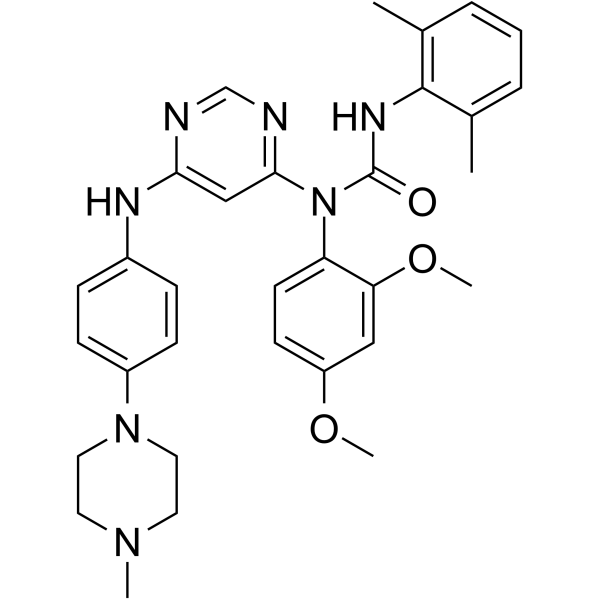 0 ImagesSynonyms: SIK inhibitor 1HG-9-91-01 is a potent and highly selective salt-inducible kinase (SIK) inhibitor with IC50s of 0.92 nM, 6.6 nM and 9.6 nM for SIK1, SIK2 and SIK3 respectively.
-
YKL-05-099
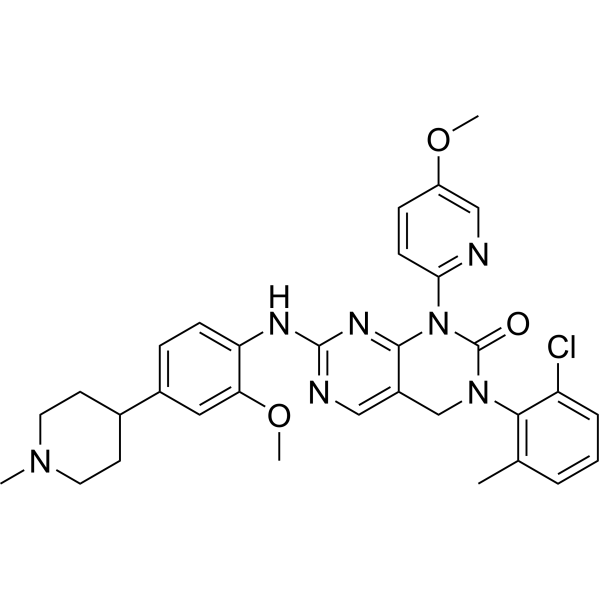 0 ImagesYKL-05-099 is a salt-inducible kinase (SIK) inhibitor. YKL-05-099 binds to SIK1 and SIK3 with IC50s of ~10 and ~30 nM, respectively. YKL-05-099 has slightly less potent SIK2-inhibitory (IC50=40 nM).
-
GLPG3312
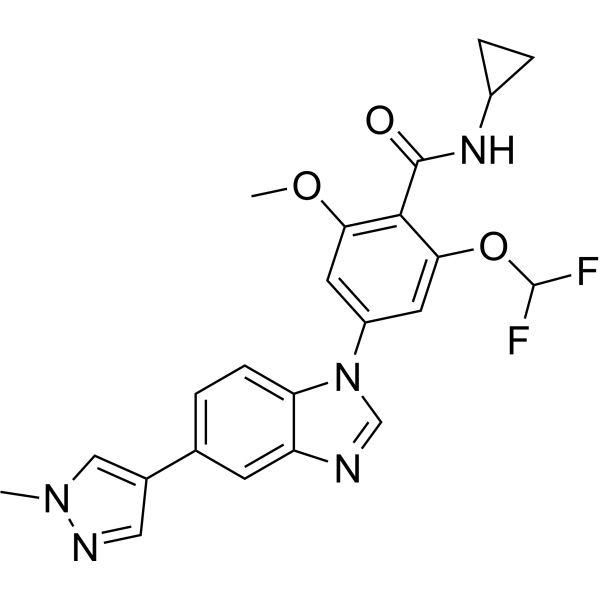 0 ImagesGLPG3312 (Compound 28) is an orally active SIK inhibitor with IC50 values of 2.0 nM, 0.7 nM and 0.6 nM for SIK1, SIK2 and SIK3, respectively. GLPG3312 exhibits anti-inflammatory and immunomodulatory activity in vitro on human primary myeloid cells and in vivo in mouse models. GLPG3312 has good oral bioavailability and can be used for research on inflammatory and immune diseases.
-
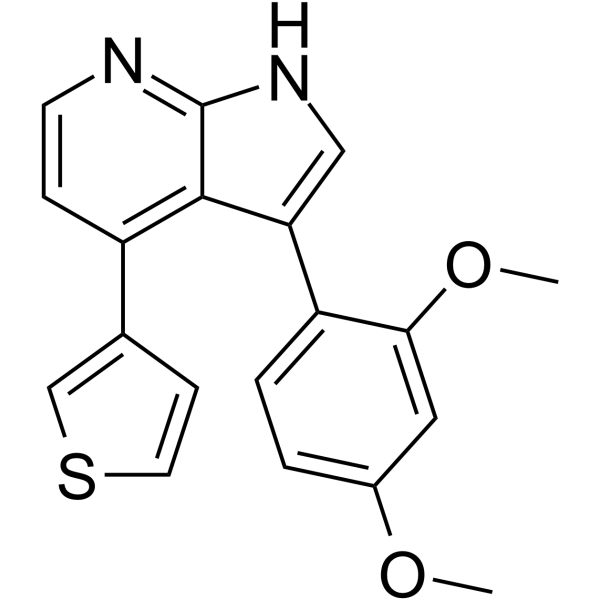
MRT199665
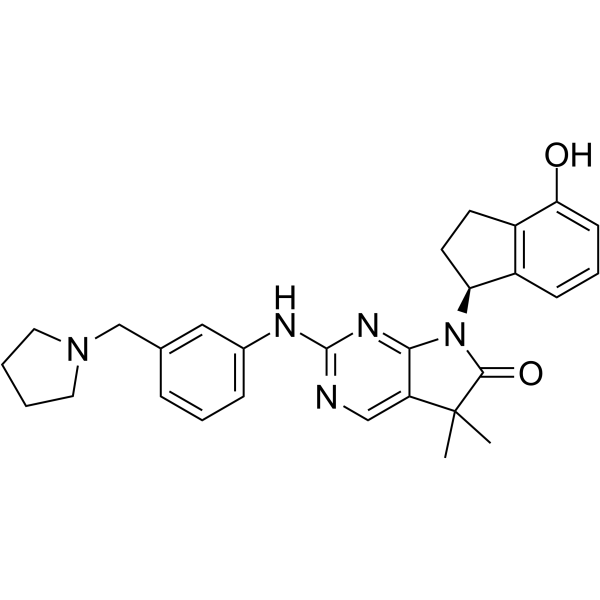 0 ImagesMRT199665 is a potent and ATP-competitive, selective MARK/SIK/AMPK inhibitor with IC50s of 2/2/3/2 nM, 10/10 nM, and 110/12/43 nM for MARK1/MARK2/MARK3/MARK14, AMPKα1/AMPKα2, and SIK1/SIK2/SIK3, respectively. MRT199665 causes apoptosis in MEF2C-activated human acute myeloid leukemias (AML) cells. MRT199665 inhibits the phosphorylation of SIK substrate CRTC3 at S370.
-
SIK-IN-6
 0 ImagesCat. No.: HY-184954SIK-IN-6 is a selective SIK3 inhibitor with an IC50 of 15 nM. SIK-IN-6 exerts anticancer activity in acute myeloid leukemia with high MEF2C expression, but does not exhibit significant anticancer activity in acute myeloid leukemia with low MEF2C expression or in ovarian cancer. SIK-IN-6 can be used for the research of acute myeloid leukemia.
-
SIK2/3-IN-3
 0 ImagesCat. No.: HY-182804CAS No.: 3069526-08-2
-
YKL-06-061
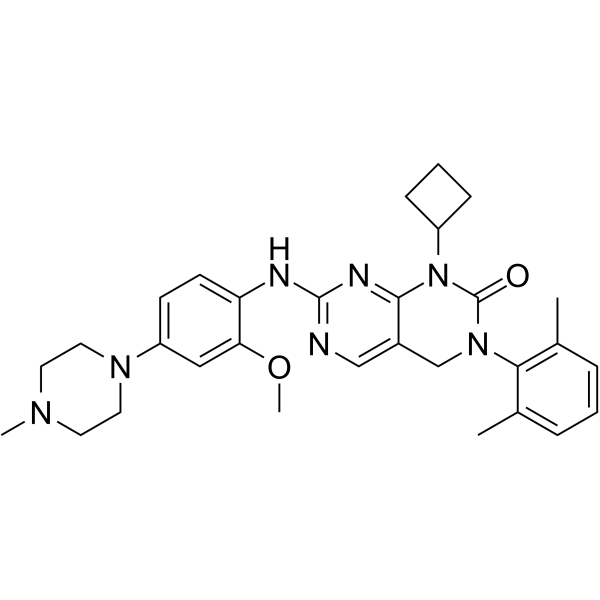 0 ImagesYKL-06-061 is a potent, selective, second-generation salt-inducible kinase (SIK) inhibitor with IC50 values of 6.56 nM/1.77 nM/20.5 nM for SIK1/2/3, respectively.
-
MRIA9
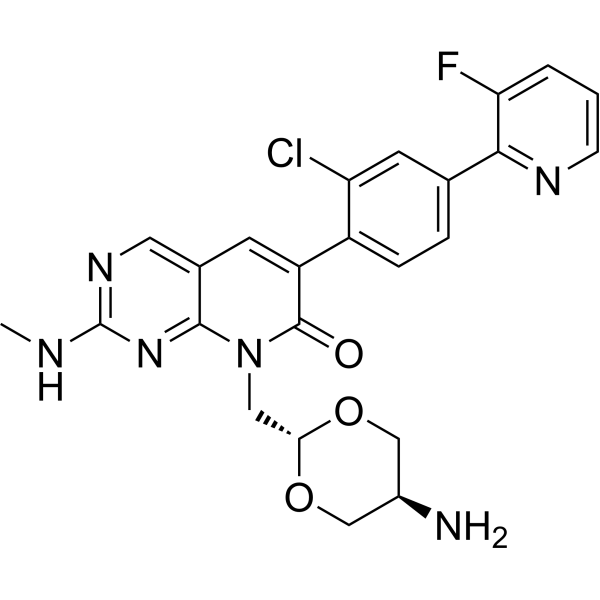 0 ImagesMRIA9, a chemical probe, is an ATP-competitive, pan Salt-Inducible kinase (SIK) and PAK2/3 inhibitor, with IC50 values of 516 nM, 180 nM and 127 nM for SIK1, SIK2 and SIK3, respectively.
-
GLPG4970
 0 ImagesGLPG4970 is a potent, selective and orally active salt-inducible kinase 2/3 (SIK2/SIK3) dual inhibitor with IC50 values of 0.3 nM and 0.7 nM. GLPG4970 has weak inhibition of hERG channel with an IC50 of 29 μM. GLPG4970 can decrease TNFα release and increase IL-10 release GLPG4970 can be used for the researches of inflammation and immunology, such as colitis.
-
SK-124
 0 ImagesCat. No.: HY-173191CAS No.: 2760404-50-8SK-124 is an orally active salt-inducible kinase (SIK) inhibitor with an IC50 of 230 nM against SIK1, 4.1 nM against SIK2, and 21 nM against SIK3, exhibiting excellent kinome selectivity. SK-124 blocks SIK-mediated CRTC2 phosphorylation, promotes CRTC2 nuclear translocation, and regulates vitamin D metabolism by upregulating renal Cyp27b1 and downregulating Cyp24a1. SK-124 upregulates the expression of bone-related genes, increases serum Ca2+, 1,25-vitamin D and intact FGF23 levels, and suppresses endogenous PTH levels. SK-124 can be used in studies related to osteoporosis, male osteoporosis, and chronic kidney disease-mineral and bone disorder.
-
SIK2-IN-4
 0 ImagesSIK2-IN-4 (Compound 4) is a highly selective SIK1/2 inhibitor (IC50s 0.143 and 0.076 μM, respectively). SIK2-IN-4 reduces the phosphorylation of transcription coactivator 3 (CRTC3) by targeting SIK1/2, thereby regulating cAMP response element binding protein (CREB)-dependent transcriptional activity. SIK2-IN-4 inhibits the production of pro-inflammatory cytokines such as TNF (IC50: 0.11 µM), IL-12/23 p40 (IC50: 0.25 µM), and IL-23 (IC50: 0.47 µM), while inducing the expression of the anti-inflammatory cytokine IL-10. SIK2-IN-4 can be used to study intestinal inflammation and other chronic inflammatory diseases.
-
SIK2-IN-3
 0 ImagesCat. No.: HY-171590CAS No.: 2810809-10-8SIK2-IN-3 is an orally active SIK1/2 selective inhibitor (IC50: 0.128/0.084 μM). SIK2-IN-3 inhibits CRTC3 phosphorylation and myeloid cell pro-inflammatory cytokine production. SIK2-IN-3 ameliorates systemic and tissue inflammatory responses in a mouse anti-CD40 colitis model.
-
SIK1-IN-1
 0 ImagesCat. No.: HY-178014SIK1-IN-1 (Compound 27) is a selective Salt-inducible kinase 1 (SIK1) inhibitor with an IC50 of 0.7 nM for SIK1 over SIK2 and SIK3. SIK1-IN-1 has no cytotoxicity against HEK293 cells and PBMCs (maximum concentration of 30 μM). SIK1-IN-1 also has potent inhibitory activities for 392 kinases, in particular tyrosine kinases, such as FGR, HCK and LYN).
-
SIK2-IN-5
 0 ImagesCat. No.: HY-184862CAS No.: 1613711-28-6
- 1



